AI has expanded what a production can imagine. A traditional shoot still captures what imagination cannot replace: the truth of a real place, a real person and a real moment.
For hospitality, private aviation and premium brands, the choice between AI-enhanced production and a traditional film shoot should never begin with technology. It should begin with the audience. What must they understand? What must they believe? What should they feel when the film ends?
Once those questions are clear, the production method becomes a strategic decision rather than a fashionable one.
When AI-enhanced production makes sense
AI production is strongest when a campaign needs visual possibility, controlled transformation or a more agile way to build a cinematic world. It can extend existing brand assets, help visualise places or ideas that are difficult to film, and create a coherent family of campaign material without treating every asset as a separate production.
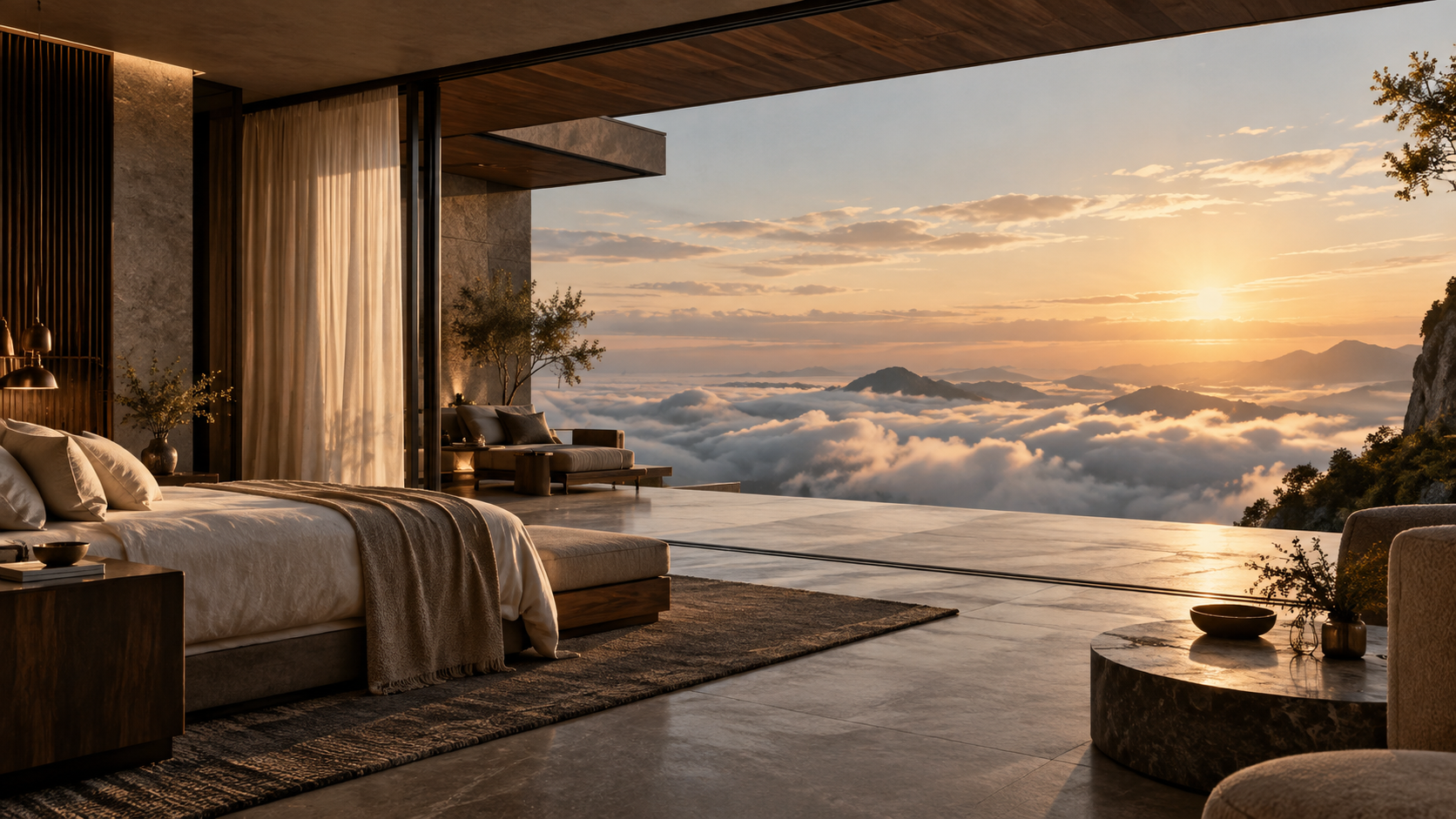
You already have strong photography
A hotel may have fifty excellent property photographs but no film that guides a potential guest through the experience. With careful direction, those images can become the foundation of a concise cinematic journey: arrival, atmosphere, room, dining, detail and departure. The objective is not to make a photograph move for its own sake. It is to create continuity and help the viewer understand how the stay feels.
The concept is difficult or impossible to capture literally
Some ideas depend on dreamlike transitions, imagined environments, historical reconstructions or a visual metaphor that would require extensive sets and logistics. AI can make those concepts producible while allowing the creative direction to remain ambitious.
The campaign needs multiple adaptations
A hero film rarely works alone. Brands often need shorter edits, vertical versions, still frames, launch visuals and platform-specific variations. An AI-enhanced workflow can be designed as a campaign system from the beginning, provided visual consistency and usage requirements are managed deliberately.
The location is unavailable
Seasonality, renovation, aircraft availability, weather, privacy and operational demands can make filming difficult. AI can help bridge genuine production constraints, but it should not misrepresent a property, cabin or service as something it is not.
When a traditional film shoot makes sense
A camera remains the right instrument when the value of the film depends on documentary truth, precise physical details or spontaneous human behaviour. The more a purchasing decision relies on evidence, the more important authentic capture becomes.
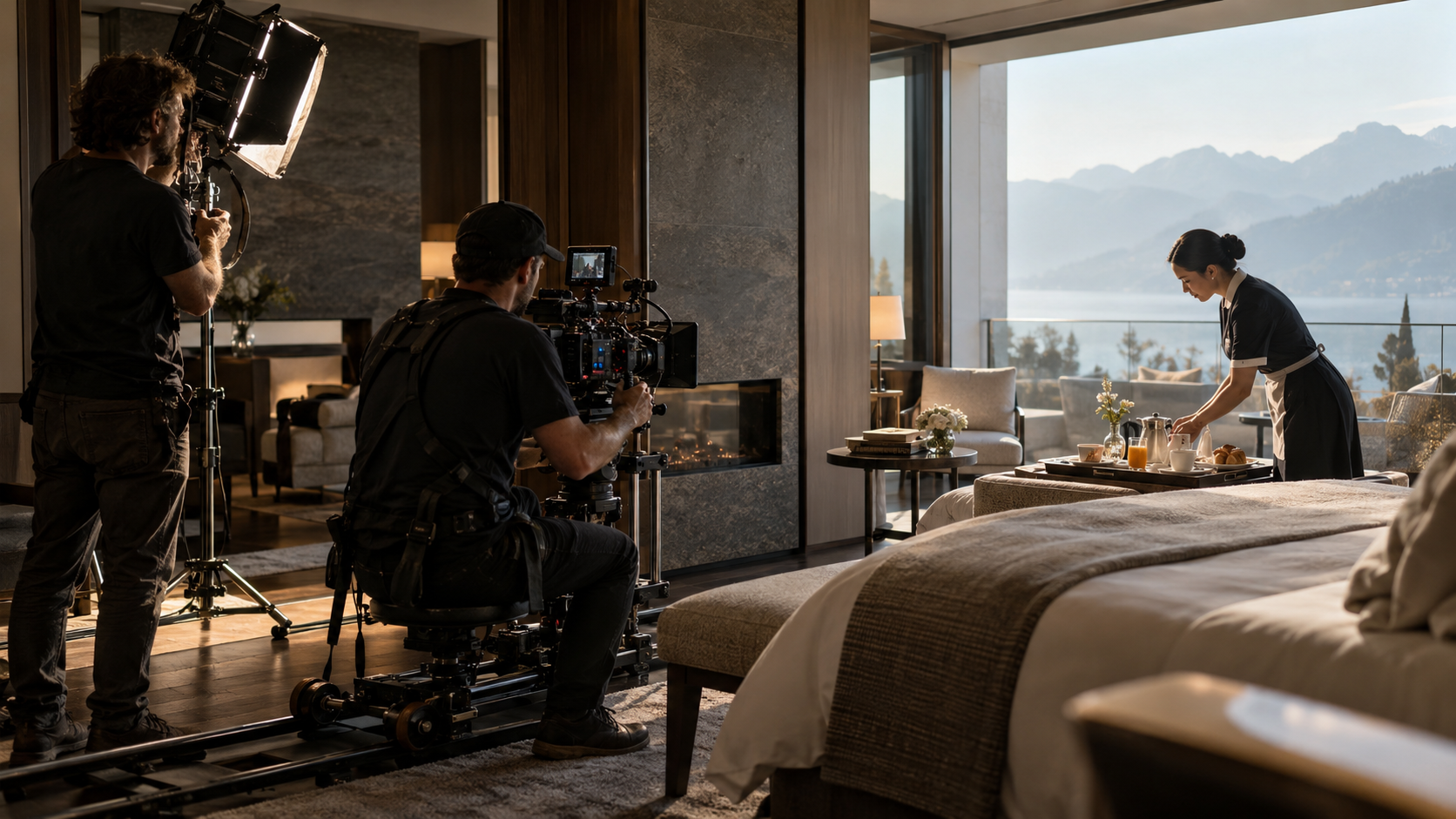
The real product must be demonstrated accurately
If a hotel has a signature suite, a restaurant has a distinctive service ritual or an aircraft campaign needs to demonstrate a particular cabin feature, filming the real environment gives the audience reliable visual information. This is especially important when small differences influence trust.
People are the story
Founder films, interviews, guest stories and service-led narratives often depend on subtle human moments: a pause, a gesture, eye contact or the rhythm of a real interaction. These details are difficult to manufacture convincingly because their value comes from being observed rather than designed.
Material texture matters
Premium brands invest in surfaces, acoustics, light and craftsmanship. A skilled crew can capture how materials respond in a real space and how the atmosphere changes as someone moves through it. When those physical qualities are central to the promise, original cinematography has a clear advantage.
The best production method is the one the audience never has to think about.
Why the hybrid approach is often strongest
Many campaigns do not need to choose one method exclusively. A hybrid production can use original footage for truth and AI-enhanced imagery for possibility. The real location, people and product create credibility; controlled visual extensions create scale, transitions and a distinctive campaign language.
For a hotel, that might mean filming key guest moments and combining them with an AI-enhanced journey created from the property’s existing image library. For private aviation, it might mean capturing true cabin details while using carefully directed visual sequences to express quiet, time and freedom. The methods should feel like one film—not separate techniques competing for attention.
A practical decision framework
When the concept depends on transformation, existing imagery, controlled visual worlds, difficult access or a flexible campaign system.
When the audience must see the real product, real people, precise details or unscripted human behaviour.
When the campaign needs both credibility and imaginative reach—and both methods can be directed as one coherent visual language.
What clients are actually buying
The production method is only one part of the engagement. A strong campaign still requires concept development, a creative treatment, storyboarding, production, editing, sound design, platform adaptations and clear usage licensing.
AI does not remove the need for taste, judgement or responsibility. Traditional production does not guarantee a meaningful film simply because a camera crew was present. In both cases, the value comes from how every decision supports one emotional promise.
At Maison Kamina, we select the production approach after understanding the experience a brand needs to communicate. Sometimes the answer is AI-enhanced. Sometimes it is a traditional shoot. Often it is a carefully managed combination of both.